
Future risk profession will be defined by judgement, influence and integration
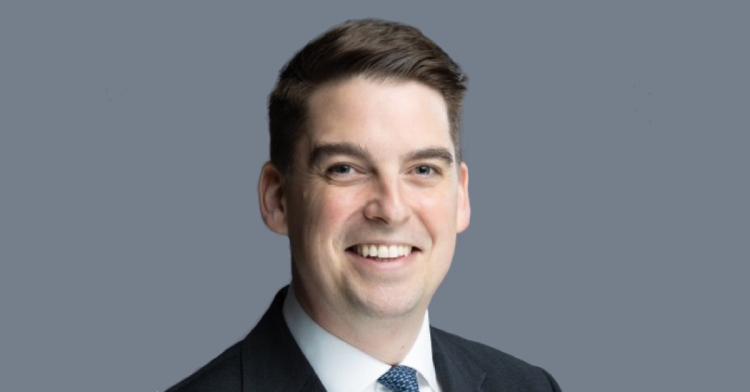
With risk at a defining moment, David Hayden-Case of Swiss Re Corporate Solutions, urges businesses to shift from prediction to preparedness.
The theme of Airmic’s Risk Forum this February – Future World. Future Profession – is not a slogan, it’s a wake-up call. Because the uncomfortable truth is that the future world is arriving faster than our profession and industry is evolving.
Our in-house research unit, Swiss Re Institute, has been tracking this acceleration closely. Across climate, geopolitics, technology and society, what stands out is not just the scale of risk – but the speed, interconnection and systemic nature of it.
Risks no longer arrive one at a time: they stack, cascade and compound. And that changes everything about what it means to be a risk professional.
Let me start with a simple observation.
For decades, risk management has been framed around protection: protecting balance sheets, operations and downside. Today, while these remain necessary and essential, they are no longer sufficient.
In today’s environment, true resilience is no longer about bouncing back, it’s about bouncing forward. This means adapting, re-configuring and sometimes reinventing in the face of disruption.
As Nassim Nicholas Taleb – the author and analyst who coined the phrase Black Swan – puts it: "Antifragility is beyond resilience or robustness. The resilient resists shocks and stays the same; the antifragile gets better."
Risk is outpacing insurance
Swiss Re Institute research shows that the global protection gap – the difference between economic losses and what is insured – continues to widen, year on year.
This is not because risk professionals aren’t doing their jobs, but because the nature of risk itself is changing faster than traditional risk management and risk financing mechanisms can keep up.
Climate risk is the most obvious example. Last year alone, natural catastrophes caused hundreds of billions in economic losses globally, with a growing share driven by what are considered "secondary perils" – floods, heatwaves and wildfires. Risks that were once thought of as “non-peak” are now relentlessly persistent.
According to Swiss Re Institute data, insured losses from natural catastrophes surpassed the 100-billion-dollar mark in 2025 for the sixth consecutive year, driven by the unprecedented LA wildfires in the first quarter of 2025 and severe convective storms in the US over the course of the year.
But climate is not acting alone. Geopolitical fragmentation is reshaping supply chains. Trade is becoming more regional, more politicised, more weaponised and more fragile. Geoeconomic blocs are solidifying – increasing resilience for some, while introducing new concentrations of risk for others.
At the same time, societal trust continues to erode, as revealed in the latest Edelman Trust Barometer. The signal is already clear: stakeholders are more sceptical, more polarised and quicker to withdraw consent.
Turning to technology, artificial intelligence is no longer emerging – it has emerged. It is transforming industries and society, cyber risk, decision-making, and the nature of professional judgement itself.
AI does not just introduce new risks; it reshapes existing ones, often
faster than governance frameworks or traditional systems of control can respond.
Judgement, influence and integration
Put all of this together, and we arrive at a defining moment. Because when risks are systemic, interconnected and fast-moving, resilience cannot sit at the edge of the organisation. It has to sit at the core.
Today’s big challenges – geopolitics and geoeconomics, emerging risk, organisational resilience and trust – are not separate conversations. They are different lenses on arguably the same question: How do organisations make good decisions under deep uncertainty?
This is where the risk profession takes centre stage. The future risk professional is not defined by tools, frameworks or models – important
as those are. They are defined by judgement, influence and integration.
Judgement, because no amount of data will remove ambiguity. Swiss Re Institute research consistently shows that the biggest losses occur not from unknown risks, but from known risks that were misunderstood, mis-prioritised or poorly communicated.
Influence, because resilience is a leadership issue. It lives in culture, incentives and strategy. If the risk function does not have a voice at the top table, resilience remains esoteric and theoretical.
Integration, because risk cannot be managed in silos when shocks propagate across systems. Climate affects supply chains. Cyber affects safety. Geopolitics affects talent, capital and trust.
From prediction to preparedness
The organisations that thrive will be those that connect these dots early – not perfectly, but deliberately.
There’s a powerful insight from the Swiss Re Institute that captures this moment well: the most resilient organisations are not those that try to predict the future most accurately, but those that prepare for multiple plausible futures simultaneously.
That mindset shift – from prediction to preparedness – is profound. It asks risk professionals to move from being guardians of the downside to architects of adaptability.
As a profession, we must be curious, not defensive; strategic, not reactive; forward-looking, not retrospective. And, most importantly, we must be human. Because amid all this complexity, resilience ultimately comes down to people – their decisions, behaviours and willingness to challenge assumptions and act early.
For risk professionals helping their organisations navigate an extremely challenging global landscape, they should hold one question in mind: If risk is now a driver of competitive advantage, not just cost, what does that require of us – individually and collectively – as a profession?
The future is not waiting for our answer. But the future profession – our profession – has never been more relevant, more necessary or more influential than it is right now.
David Hayden-Case is head customer management UK & Ireland for Swiss Re Corporate Solutions. This article is based on the opening speech he gave to Airmic members at its Risk Forum in February.