
COP31: What signals should risk professionals be watching for?
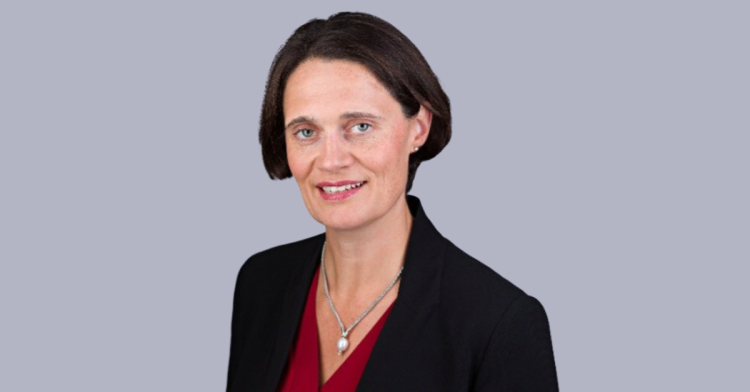
As world leaders gather in Turkey to shape the global climate policy agenda, Airmic is hosting a climate Special Interest Group, live from the conference with Marsh’s Amy Barnes. Here she speaks to Airmic News about why COP outcomes matter for risk professionals – and what they should look for.
The annual meeting of global governments, business leaders and scientists to set policies and negotiate agreements for meeting UN climate targets has become a major set piece in the annual climate agenda. It’s a chance for leaders across 200 countries to evaluate, debate, negotiate and, when needed, re-set ambitions.
The official themes of this year’s conference, hosted in the Turkish city of Antalya, are all encompassing, ranging from zero waste and food security to climate-resilient cities, oceans & seas and the energy transition.
Its global significance is unquestioned, but for businesses, unpacking the plethora of announcements, pledges and commitments can feel overwhelming – and translating it into tangible business actions even more so.
Amy Barnes, head of energy & power and climate & sustainability strategy at Marsh, has attended five COP meetings and admits there can be a “few steps” before the outcomes of the meetings enter the private sector, but she is clear that proactive businesses that identify and act on the early signals coming out of COP will be at an advantage.
“COP meetings contain many lead indicators for the private sector. There is a clear trickle-down effect from what happens at COP to business and risk decisions around the world. Taking an active interest in what happens can give you an edge in the future.”
Businesses should identify which countries are sending policy signals in their statements, Barnes advises, and then focus on the countries in which their business operates as well as those of its supply chain.
Identify potential regulatory changes, but also look for opportunities, she adds: “Trillions of dollars of capital need to be spent in support of the net-zero transition. Look for the demand signals; where will the investment go?”
Adaptation and resilience moving up the agenda
Early COP meetings were heavily focused on decarbonisation and the transition to a net-zero economy – highly politicised and divisive topics. While these are still key priorities, recent conferences have focused more on how the world adapts and builds resilience to the changing climate.
With populations increasingly feeling the impact of extreme weather, adaptation and resilience are expected to remain high on the agenda in Turkey this November.
The insurance industry has a prominent voice on these topics. Its ability to influence corporate and government behaviours through appropriately pricing risk and rewarding resilience through lower premiums is well recognised.
“The reality is that insurance only responds to a risk; as soon as something becomes a near certainty, it stops being insurable. And so what insurers need to be doing is providing a pricing signal to incentivise adaptation and resilience,” says Barnes.
Recent research from Marsh suggests insurers are not yet optimising this leverage, however. Only a quarter of respondents in its 2026 Climate Adaptation Survey report that adaptation measures are being recognised in insurance negotiations.
“The challenge is that insurers are using backward-looking models, so they are assessing resilience standards against historic extreme weather rather than future extreme weather,” explains Barnes. “The result is that some of those resilience interventions aren't being valued.”
Underwriters need a structured pricing methodology to translate resilience into lower premiums, she adds. “Otherwise, you’re asking the underwriter to make a guess. We need a forward looking, engineering approach that makes the reduction in average annual losses explicit.”
Climate change: a homeless risk
The leaders gathering in Turkey are expected to put pressure on moving from commitments to measurable implementation. At a corporate level, climate change readiness is mixed at best, says Barnes: “There is some excellent practice out there, but it is the exception rather than the rule.”
Hyperscalers, digital infrastructure and corporations with high-value assets are usually the most proactive, as well as industries and geographies where climate change is starting to bite.
“Companies that are feeling it are acting on it, especially with regards to access to water. In Taiwan, for example, farmers are being paid not to plant rice to preserve water for semiconductor production, while a soft drinks company in Mexico is reconsidering relocating because the borehole is running dry.”
At an organisational level, one of the biggest challenges is that climate risk is so broad that it becomes homeless: “It impacts worker safety, supply chains, productivity, investment and so much more. It’s so cross cutting that no one person owns it.”
Risk professionals can play an important role, helping organisations understand the vulnerability of their assets to climate change and identifying appropriate interventions.
“This includes ensuring that rebuilding takes future climate risks into account, as well as engaging with insurers to consider how the increasing frequency and severity of extreme weather events could affect the availability of insurance,” says Barnes.
They also have an important role in helping underwriters understand emerging technologies and processes. Where businesses adopt unfamiliar approaches to aid decarbonisation, such as using lasers to produce non-animal proteins, building this understanding is essential to ensuring that insurance does not become a barrier to innovation and the transition to a lower-carbon economy.
A turning point?
Progress often happens when countries and companies start to feel the heat – in this case, both literally and metaphorically. With COP 31 taking place as the world exits the hottest year recorded and heads into what is forecast to be one of the most tumultuous El Niño seasons in a generation, all eyes now turn to Turkey.
And while climate-related headlines can feel perpetually gloomy, Barnes says COP conferences can reveal sources of hope: “I come back from COP meetings feeling really energised. There is so much positive action and success stories that go below the radar.
“With all the challenging weather we’re having, I think the world could soon have a very different perspective of how we need to lean into these issues.”
Airmic Energy & Climate Special Interest Group, 19 November: Live from Antalya, Amy Barnes will explore some of these themes in more detail, including insights on the conversations emerging from COP31 and what they mean for risk and insurance teams. Click here for more information and to register.