
“We have to find a way to bring our workforce into the new world”
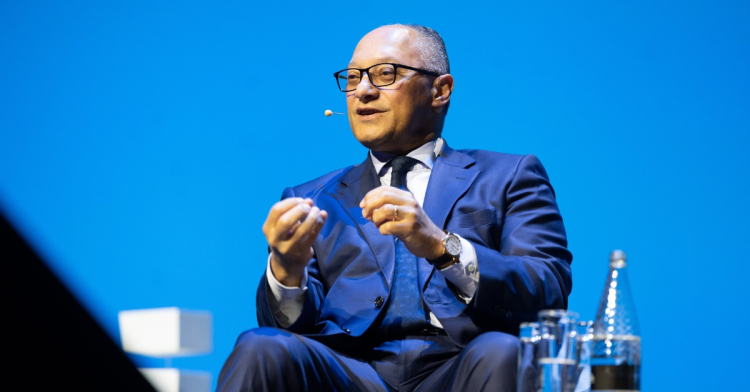
Swiss Re Group CEO, Andreas Berger, on building an AI-ready workforce, why AI should drive client outcomes not cost cutting, and how success starts with going back to basics.
KEY TAKEAWAYS:
-
Companies should actively manage the impact of AI on their workforce
-
Conducting AI talent gap analyses can support the transition
-
Focus AI strategies on improving client outcomes, not cost cutting
-
AI should be regulated – but preserving innovation is vital
-
Embrace strategic patience in a fast-paced world
Organisations must acknowledge and actively manage the impact of AI on the workforce, particularly how it changes job roles and requires news skills, Andreas Berger, Group CEO of Swiss Re, urged delegates in a fireside chat with Airmic CEO Diane Maxwell, on the opening day of the conference.
Swiss Re is “AI-ready” said Berger, and the company has restructured to support AI adoption at a workforce level. This includes appointing a chief people officer that works closely alongside a chief transformation officer to manage the transition and address changes in operating models and job functions.
“What does it do to an underwriter when the productivity goes from three weeks to one day? What is happening with that person? Each underwriter has a different AI maturity, so we have to find a way to bring our colleagues into the new world.”
As part of its AI strategy, Swiss Re has conducted a talent gap analysis to identify future skills requirements and bridge AI-related gaps. They are focusing on building teams with a mix of experienced professionals and digitally native talent. “We have this blend of experience and the combination is really paying off.”
AI should drive client value not cost-cutting
Businesses and insurance companies should focus AI strategies on improving client outcomes – not on cost cutting, Berger added.
“What value does the client see when you implement AI? That’s a super important question,” he told delegates.
For example, at Swiss Re, AI systems are reducing the time spent on renewal processes by automating data collection and error elimination – allowing underwriters to focus on areas where their expertise and judgement are most valuable for the client.
“Improving productivity is not the same as cost-cutting. It’s about improving decision making for the benefits of clients,” said Berger. “At Swiss Re we believe that AI should always improve the human, it will not take decisions.”
Additionally, despite the rise of digitisation and AI, strong relationships remain as important as ever. As humans play a less prominent role in some areas of the business, events and personal interactions must be prioritised to build trust and rapport, Berger believes.
Regulating AI: striking the balance
Berger believes that strong internal governance is the foundation of successful AI adoption, particularly while regulatory frameworks continue to evolve. Rather than rushing to implement every new technology, he encouraged leaders to take a measured approach, adopting the tools that align with business objectives and risk appetite.
While supportive of regulating AI, Berger warned against rules that could hinder innovation: “When it comes to AI, we need regulation, but it shouldn't be regulation for regulation's sake – that kills innovation and advancement. It’s a fine line.”
The company also sees board-level expertise as critical to effective oversight. Directors must understand both the opportunities and risks associated with AI, particularly its impact on people and organisational culture.
To support better decision-making, Swiss Re has brought in board members with deep AI knowledge, arguing that many organisations risk making poor strategic choices if that expertise is absent from the table.
Get the foundations right and embrace change
The rapid advance of AI is just one of a range of interconnected transformational changes affecting businesses and societies across the world. Berger urged companies to embrace change with “strategic patience”, stressing the importance of securing foundational strength:
“Before you think about change, you need to get your house in order. You need to get that foundation right, go back to basics. Otherwise, you add complexity on something imperfect which results in slow and costly decision making.”
The very purpose of risk and insurance, he reminded his audience, is societal – it is making the world more resilient and helping it cope with uncertainties and disruptions. These are our industry’s fundamentals, and – collectively – we must be better at explaining it to a wider business and societal audience:
“I think it's not that well understood. We are not explaining our purpose well enough. I think we have to do a better job at that because our industry has a societal importance.”