
Airmic calls for greater financial fluency among risk professionals
Joint report with CNA Hardy helps members articulate the commercial value of risk management to boards and senior leaders.
KEY TAKEAWAYS FROM THE REPORT:
-
Risk professionals do not need to be accountants, but they do need to be able to translate insurance terminology into a boardroom narrative
-
Risk registers, frameworks and taxonomy matter most to boards when they are directly connected to financial impact
-
Captives are one of the most challenging areas to translate clearly and effectively
-
Financial fluency is built through repetition and consistency over time; it does not come from single conversations
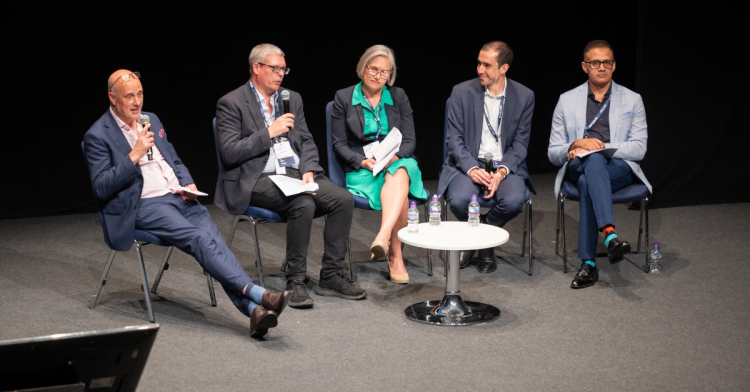
Many risk professionals struggle to gain influence with their boards and c-suites, especially when expressing the upside and strategic value of risk, according to a report by Airmic and CNA Hardy, launched at its conference in Birmingham.
In boardrooms, success is often measured through financial lenses such as equity valuation, credit ratings and capital efficiency – often in contrast to more technical and specialist insurance language.
For risk professionals to gain influence and sell the strategic value of risk and insurance, they must learn to speak the same financial language as their board, according to the report, Reframing Risk, Financial Fluency for Risk and Insurance Professionals.
“When boards debate about value through cash flow, balance sheet strength, volatility, leverage and returns, the most meaningful way for risk and insurance to enter those conversations is to be linked to those outcomes,” said Hoe-Yeong Loke, Airmic’s head of research.
“To bridge the gap between insurance language and the board narrative, effective communication is essential for gaining trust and influence. From the outset, we wanted this research to be of practical value to Airmic members.”
The art of translation
Drawing on input from the financial analysis community and experienced Airmic members, the report offers advice on explaining how risk and insurance decisions protect cash flows, preserve capital, reduce volatility and support sustainable value creation.
“Financial fluency, in this context, is not about technical finance expertise. It is about translation,” the report notes. “Without that translation, even good risk and insurance decisions struggle to gain traction at senior level.”
Most risk reports focus on the downside of risk – what could go wrong and how insurance can protect against it – says Martin Richards, marketing and communications director at CNA Hardy:
“We wanted to shift the conversation and explore the upside: how risk and insurance professionals create value and whether they're communicating that value effectively to boards and c-suites."
The purpose of the research is not to turn risk and insurance leaders into accountants, he added:
“The research showed there was real appetite to reframe conversations around commercial outcomes. If we can help risk and insurance professionals frame what they do in language that's meaningful to boards, then we've achieved what we set out to do with this report.”
“That said, this is only the beginning. The feedback and ideas we received from members at the conference have given us plenty to build on, and we are already exploring how we can take this work forward together. We look forward to sharing more in the months ahead.”
Why financial fluency matters, members share their views
"Good conversations are built on good information. Brokers have access to valuable market data and benchmarking, and in-house teams understand the business. When we combine those strengths and arrive aligned, with relevant insights rather than just opinions, we give boards something they can genuinely use." Ben Cooney, Director, Global Risk & Compliance, Avison Young
"Good communication is about telling a story in language your audience understands. Keep it simple, always have the detail behind you if you're challenged, and make sure you can connect everything back to the company's P&L. That's what gives you credibility." Asif Shah, Risk and Transformation Leader, 3 Brain Cells
"Boards are focused on cash flow and growth, so if you can explain how your insurance strategy supports growth, frees up cash flow and protects the business over the long term, you're speaking their language." Sami Elleithy, Director, Global Risk Management, Comcast NBCU Sky
"Captives can sound like complicated financial structures when, in reality, they're strategic tools. The conversation shouldn't start with the structure itself. It should start with the business problem the captive is solving and how it gives the organisation more control and flexibility over the way it finances risk." Cleo Curl, Group Insurance Director, Landsec