
“We’ve got to go for the win”
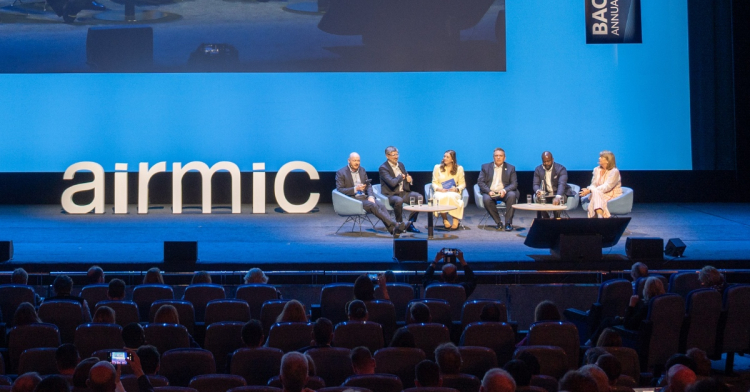
Employee benefits, protected cells and regulatory commitment: captive panel outlines the essentials for making the UK captive regime a success.
KEY TAKEAWAYS:
-
Airmic community has unique chance to shape UK captive regime
-
Employee benefits could be a UK differentiator
-
Protected Cell Companies are key for accessibility
-
Regulator must deliver on promises from day one
-
Globally, captives have evolved into a mainstream risk tool
-
A successful UK regime will promote captives worldwide
The UK has an unparalleled opportunity to take a leading role in the global captive landscape and become competitive with domiciles such as Guernsey, Bermuda and Vermont, according to the conference captive panel.
The positive language and level of engagement adoped by the PRA to date has given rise to optimism, the panel agreed, with the regulator stressing it understands the importance of proportionality, competitiveness and accessibility.
However, it will be the detail that determines the UK’s ability to build a carefully crafted regime that appeals to a wide range of businesses and can compete internationally – and Airmic members have a chance to shape the outcome by responding to the PRA’s formal consultation by October 15.
“Everyone sat in the audience today and on this panel has the opportunity to contribute to what the regime looks like,” said Leon Walker, EMEA head of captives at Aon. “And to use the football analogy, we've really got to go for the win – to aim for the very top.”
The non-negotiables
One area where panellists believe the UK could distinguish itself is employee benefits (EB).
A growing number of captives globally are looking to expand their captives into EB, which bring diversification benefits, a more predictable risk profile and consequently a potentially more stable portfolio.
Over 50% of UK captive owners already write EB, according this year’s Airmic captive survey. This is significantly higher than the global average and reflects the maturity of the UK captive market. A well-designed EB provision could help attract organisations looking to maximise the value of their captive programmes:
“Permitting captives to re-insure employee benefits from day one is definitely something we’d ask for,” said the panel moderator, Richard Cutcher, Airmic’s captive ambassador. “It will serve as a differentiator and show that we're serious about understanding what captives bring to organisations.”
The provision for Protected Cell Companies (PCCs) has become a fundamentally important feature of almost all successful, modern captive regimes, added Walker.
PCCs allow organisations to access captive structures at a lower cost and administrative burden, making them attractive to mid-market FTSE 250 companies – a potentially strong growth area for the UK.
“The UK regime is about accessibility to a broader range of companies across the UK and beyond, and a PCC really helps with that,” Esme Gould, head of captives and ART, UK Zurich Insurance, agreed.
“It supports speed and flexibility and lowers the barrier to entry. Whether it’s a mid-market company or a business looking to set up a secondary captive in the UK, it can benefit anyone while also bringing competitiveness to the UK as a product.”
PCCs will not be included in the PRA’s initial plans as they require dedicated primary legislation which is more complex and time-consuming. However, the PRA has signalled it intends to push through the legislation before the end of 2027.
Another key ingredient is regulatory commitment, the panel agreed. With no established track record, the credibility of the UK regime will depend largely on whether regulators deliver on their promises from the outset.
“While proportionality and flexibility are key, what matters in practical terms is commitment from the regulator,” said John Rowson, managing director, captive services at Howden.
Panellists stressed that sticking to published timelines and providing a consistent, predictable approach will be critical to building confidence among prospective captive owners.
UK will bring legitimacy to captives globally
A successful UK regime will not only benefit the UK, but also strengthen the credibility of captives globally, further accelerating their transition to a mainstream risk management solution, the panel noted.
“The UK having a captive regime is a sign of captives’ legitimacy that the offshore label has never achieved,” observed Caroline Wagstaff, CEO of the London Market Group. “Having the UK, the global centre for risk transfer, as a home for captives will be a really great moment.”
Captives are no longer viewed purely as a response to changing insurance market conditions, observed Dan Sammons, captives manager UK & Ireland at HDI. Instead, organisations increasingly recognise their long-term value in providing greater control, stability and a more effective approach to managing total cost of risk.
“There’s been an evolution,” he said. “According to a recent survey, less than 10% of risk managers reduce premiums in their captive based on where they are in the market cycle. The capital is set up to be a long-term stability and control tool”.
Ultimately, the message from panellists was clear: the UK has a rare opportunity to establish itself as a leading captive player, but success will depend on getting the fundamentals right.
If regulators can deliver a credible, competitive and accessible regime, the UK will not only attract new captive formations but also help accelerate the wider adoption of captives as a strategic, long-term risk and capital management tool.