
UK captive regime: have we struck the right balance? PRA asks members
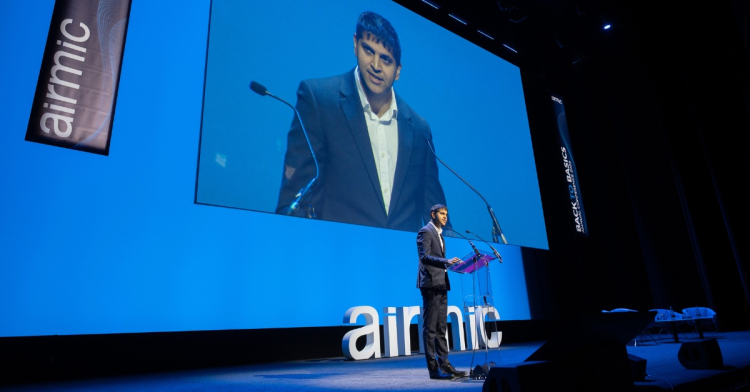
We are determined to build credibility quickly and to deliver consistently, Shoib Khan tells conference.
KEY TAKEAWAYS:
-
The UK captive regime is on track to go live in summer 2027
-
Airmic members are called on to respond to formal consultation this summer
-
The PRA recognises the importance of proportionality, transparency and flexibility
-
The regulator believes its philosophy will be just as important as the rules
-
The PRA aims to have a pipeline of applicants when the regime goes live
-
A successful captive regime will benefit the wider UK economy
The UK’s captive regime is on track to go live in the summer 2027, according to the Prudential Regulation Authority (PRA) – but it wants to hear from Airmic members on whether it has “struck the right balance,” Shoib Khan, director of insurance supervision at the PRA, urged delegates.
The PRA has consulted widely, including with Airmic and its membership, and has been “listening carefully,” he said. “We recognise that a transparent, cost-effective and proportionate regulatory regime will best support access to the unique advantages of locating in the UK.”
The captive wish list
The UK captive community has long been calling for the regime to be “internationally competitive,” but determining what that means in practice requires the PRA to balance flexibility and innovation with its regulatory objectives.
Speaking just before the PRA published its formal consultation document, Khan outlined the key messages that have emerged from industry engagement.
Stakeholders have emphasised the importance of proportionality and clarity, particularly in relation to capital requirements, the role of contingent capital and governance and reporting expectations, he said.
The PRA understands the need to consider not only the amount of capital required, but also its form and how it can be deployed, ensuring that capital is not perceived as being unnecessarily trapped within the captive structure.
There is also support for moving away from Solvency II-style requirements towards a simpler, factor-based approach that is more appropriate for captives.
Carefully drawn boundaries
Khan also noted a strong demand for a transparent authorisation process, with clear fees, defined service standards and a knowledgeable, responsive authorisation team empowered to make timely decisions.
At the same time, the PRA has a duty to “keep a close eye” on policyholder protection, especially where captives expand their original purpose to write business outside of their group, said Khan.
The PRA believes that establishing “carefully drawn boundaries” will be central to achieving the balance between financial prudence, business value and innovation – and it has repeatedly called on Airmic members to actively particulate in the formal stage of the consultation this summer.
“Whether we've struck the right balance here is an area we greatly appreciate your feedback on,” urged Khan.
No room for complacency
The speech set a bullish tone on the value a UK captive regime can bring to the country, noting not only the benefits for innovation and addressing major risks such as climate change, supply chain disruption and cyber, but also repeatedly stressing the wider benefits to the economy:
“The use case shows clear potential for firms seeking to access additional risk financing vehicles while benefiting the UK insurance industry and economy more broadly, as well as advancing our own regulatory objectives,” he said.
While the UK has a “unique” set of ingredients to become an internationally competitive regime – including a world leading insurance ecosystem, the draw of the London Market, a strong regulatory and legal reputation and its time zone – the PRA is not complacent about the need to gain trust and establish its reputation from the outset.
“We are determined to build credibility quickly and to deliver consistently on what we say we'll do. We're conscious that the philosophy we bring to captive supervision will matter just as much as the rules themselves,” he said.
Just the beginning
It is eleven months since HM Treasury gave the green light for a UK captive regime, and the PRA says the timetable is on track. The formal consultation was published on July 15 , with organisations having until October 14 to respond, and the ‘go live’ date remains set for summer 2027 – at which point the PRA hopes to have a pipeline of applicants.
The regime will continue to evolve beyond 2027, for example by passing legislation to include protected cell companies (PCCs), but Khan stressed this will require continued collaboration.
“We know that this will be a collective endeavour. It will require constructive responses to our consultation paper and a shared effort across firms, advisers and practitioners to build the regime,” he said.