
War in Iran: what next?
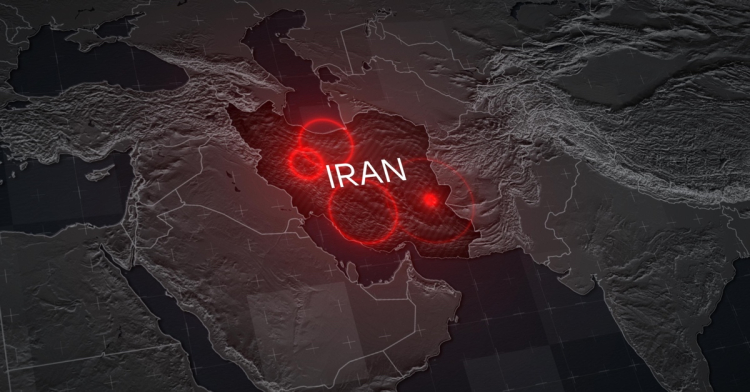
As the fallout from US/Israeli attacks on Iran cascade across the Middle East and global energy markets, business leaders must unpack what it means for their organisations. From insurance to employee safety, Airmic’s Hoe-Yeong Loke examines the key issues for risk professionals.
Rising energy prices remain the biggest risk for Airmic members and their organisations, four weeks into the war in the Middle East between the US/Israel and Iran.
The oil market saw one of its wildest days ever on 9 March, during which the benchmark Brent crude price swinging between $84 a barrel to $119 within a 24 hour period. Oil last traded above $100 a barrel in the aftermath of Russia’s invasion of Ukraine in 2022.
Central to this has been Iran’s de facto blockade of the Strait of Hormuz, through which 20% of the world’s energy supplies transits – as well as crucial fertilizer supplies.
On 1 April, the UK government announced that it would host a summit virtually with 35 countries to discuss plans to restore freedom of navigation in the Strait of Hormuz. This followed signs of US President Donald Trump trying to extricate the US from the conflict, telling the UK and its other allies to “go get your own oil.”
These were among the scenarios unpacked at the closing panel session on geopolitics at the Airmic Risk Forum on 11 February, as confrontation in the Middle East was building up but before the US and Israel commenced strikes on Iran.
Events have since panned out at the upper bounds of those scenarios that were sketched out at the Risk Forum. Given such levels of volatility in geopolitical developments, many organisations have been in a heightened state of crisis management, especially those with high exposure to energy supply issues.
Insurance: surge in demand
Insurance premiums for marine, aviation, political violence and energy lines are seeing sharp, rapid increases given the heightened regional risk. These spikes are expected to last until some semblance of stability returns to the region – but there is no consensus on how long the shooting war will likely last. According to Marsh, war-risk premiums have spiked from 0.2% to 0.25% of a vessel’s value to 1-1.5% in the course of March, and is expected to remain in that range for the foreseeable future.
In response to the de facto blockade of the Strait of Hormuz, the Trump administration has been looking to provide $20 billion in political risk insurance for Gulf shipping. Chubb will be the lead underwriter for that insurance programme to be delivered through the auspices of the US International Development Finance Corporation.
However, the International Underwriting Association (IUA) has said that shipping through the Strait of Hormuz has halted not because of the lack of insurance cover, but because of “obvious safety concerns.” The marine war risk market has otherwise continued to operate as expected.
There have been reports of Iranian minelaying ships operating in the Strait of Hormuz, though the US said it has been striking them.
The Trump administration has promised naval patrols for vessels traversing the Strait of Hormuz, but its requests to NATO allies to send ships for this purpose have so far been rebuffed. Four weeks into the war, no such naval patrols have materialised.
Meanwhile, there has been a surge in requests for insurance cover by businesses operating in the Gulf for political violence and terrorism. Reports say brokers are telling their clients to buy full political violence coverage, including cover for strikes, riots and civil commotion, and state-backed violence.
Aviation: a “hole in the sky”
The conflict has brought about significant impact on travel risk and people risk, given the flight disruptions related to the Gulf countries being struck by Iran, in particular the international airport hubs of Dubai and Doha.
The war has created what has been dubbed a “hole in the sky” over one of the world's most important air corridors. Businesses should review their travel risk policies and ensure duty of care obligations are being met for any staff in or transiting the region.
The disruption extends beyond the Middle East region itself, impacting Europe-to-Asia air traffic in particular. The result is longer flight times, higher fuel costs, and knock-on disruption to global schedules — with implications for businesses that are dependent on time-sensitive freight and personnel movements.
Cyber response: muted but for how long?
The widely anticipated wave of sophisticated state-sponsored cyberattacks against Western targets has so far been more limited than feared. This has been attributed to internet connectivity in Iran dropping to between 1 and 4% in the immediate aftermath of the strikes. In addition, the significant degradation of Iranian leadership and command structures has likely hindered the ability of state-aligned threat actors to coordinate and execute sophisticated cyber attacks in the near term.
That said, the threat is real and evolving. Risk professionals should take the opportunity to review and reinforce cyber defences — particularly in sectors such as energy, financial services, healthcare and critical national infrastructure.
Economic outlook: casting a shadow
More broadly, the continued conflict in the Middle East is casting a shadow over the global economic outlook. This was acknowledged in the UK's Spring Forecast, presented by Chancellor of the Exchequer Rachel Reeves to the House of Commons on 3 March.
The timing was awkward for the UK government. Although the Office for Budget Responsibility (OBR) had forecast inflation falling from 3.4% in 2025 to 2.3% in 2026, the current conflict — which began after the OBR finalised its latest forecasts — means that an uncertain outlook for global energy prices will have spillover effects for the UK and the global economy.
The OBR had downgraded UK GDP growth for 2026 from 1.4% to 1.1%, and the Middle East conflict threatens to push those numbers further off course.
Scenario planning: what next?
Middle East watchers broadly expect Iran to “play a long game.” Iran's strategy, they say, is to keep widening the war and make it last as long as possible. Iran's goal is to force a change in the US's calculus – by making the costs for the US high enough until Washington loses its appetite for military action in Iran altogether.
Risk professionals should also be monitoring several other developments that sit alongside the primary conflict. The Trump administration has eased sanctions on Russian oil, reportedly as a gesture to India, reducing one source of upward price pressure – but to the chagrin of Ukrainian President Volodymyr Zelensky.
Meanwhile, China’s military flights near Taiwan — a near-daily occurrence in recent years — were reported to have stopped for 12 days in early March, although China’s naval activity in the Taiwan Strait has not seen similar reductions.
Whether this reflects a strategic calculation by Beijing, caution about overextension at a moment of global volatility, or simply a coincidence, remains unclear — but it is a development worth watching.
Hoe-Yeong Loke is head of research at Airmic.