
Members urged to adapt risk strategies to new world order
Tail risk is on the rise and businesses must prepare.
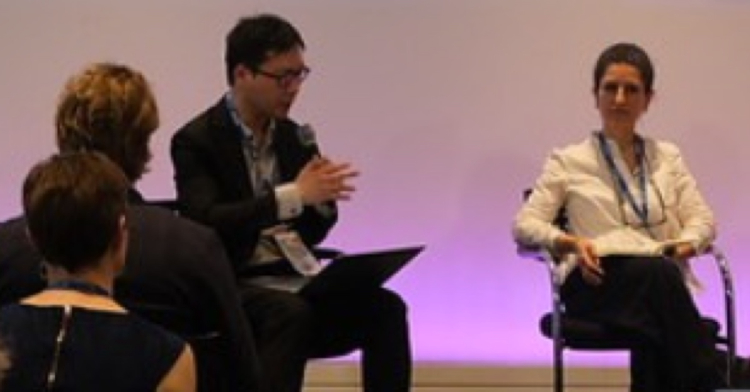
The world has changed and there’s no going back, risk professionals heard at the Risk Forum’s geopolitics panel debate – and approaches to managing risk must adapt accordingly.
Geopolitics has risen to the top of business agendas as the US pivots away from its traditional role as a guarantor of global security, and economic interdependencies – once a central tenet of the post-war order – have been twisted into vulnerabilities on the global stage.
However, while these tectonic shifts are frequently pinned to Donald Trump’s second term as US president, the panel, chaired by Airmic’s head of research Hoe-Yeong Loke, agreed that these are long-term shifts and businesses must consider them the new norm.
“The world has changed and it’s not going back to the way it was,” said Barbara Teixeira Araujo, senior economist at Moody’s. She argued that the “clear weaponisation of economic policies” in the past year has been a “wake up call” for Europe and is leading to permanent strategic shifts.
Derisking from US relationships
European countries are already “derisking from US relationships” she said, and seeking policies that promote European prosperity.
By way of example, she noted policies banning US software in government systems, the fast-tracking of the digital euro, and the implementation of ‘Buy European’ clauses for investment.
“We must still go one step further,” she added. “We need to rethink and get rid of dependencies that enable coercion. We need to change our modus operandi.”
Alex Frost, Airmic’s chief commercial officer, agreed that the current global rewiring will outlive the current US administration.
He stated that while Trump may be the “most consequential US president in its history,” the “protectionist mood is prevailing in both Democrat and Republican parties.”
Inflection point for risk strategies
As risk professionals, we must think more strategically and “lean into being prepared,” advised Gala Riani, head of strategic intelligence at risk consultancy S-RM.
Trying to predict what will happen next holds limited value on its own, she said, urging businesses to “focus on the range of possibilities and crisis management principles, and use scenarios to identify blind spots.”
Risk frameworks need rethinking, agreed Teixeira Araujo. “We must look at risk tails that we didn’t consider before. Tails are getting fatter now and we must work to understand the impact of these risks manifesting.”
For example, businesses should consider a range of tail events that could tip the global economy into recession. Speaking before the US launched an invasion of Iran in March, she said these include the Ukraine war spilling into neighbouring countries; US military action in Iran impacting oil fields; military action in Taiwan; and a re-pricing of AI stocks in the financial markets.
Change for good
As the world responds to the hardened language of realpolitik, opportunities are opening up, the panel agreed.
Europe, for example, is being forced to address a loss of competitiveness, underdeveloped capital markets and under-funded militaries – issues that have dogged the continent long before Trump’s presidencies.
“Europe was forged in a crisis and this new crisis is pushing Europe into action. We needed this to happen,” commented Teixeira Araujo.
In January this year, Canadian prime minster, Mark Carney, gave a speech to the World Economic Forum in which he stated that the so-called rules-based international order is fundamentally flawed.
Citing this speech, Airmic’s Frost ended the panel on a philosophical note, posing the question of whether today’s watershed moment in history is therefore a chance to “build something that is better for all.”