
Member Q&A: “Our role is to challenge the market”
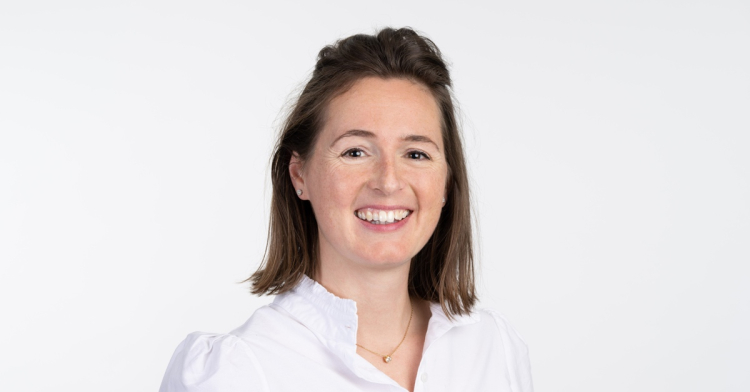
Claudia Walters, head of insurance and risk at SEGRO, talks to Airmic News about managing data centre risk, the power of the buyer, and the future of the risk profession.
Claudia, you studied Art History and French at university, how did that open doors into insurance?
It was just by chance that someone mentioned fine art insurance as I was coming to the end of my degree. It sparked my interest and – some research and a number of enquiries later – I secured work experience with a Lloyd’s fine art insurer and a specialist broker. I was surprised at how varied and intellectually engaging the industry is and decided to apply for a Willis grad scheme.
At Willis you moved into kidnap & ransom insurance before moving in-house at global mining company Anglo American. During Covid, you moved to SEGRO. Tell us about the company and your role.
SEGRO is a FTSE 100 real estate company that owns and manages logistics and industrial buildings, and data centres. Within my role I oversee group-level risk and insurance placement for the group.
Taking on the risk element added a new dimension to my career and strengthened my belief that you can’t truly manage insurance without managing risk first. There are many risks where insurance is not a possible or the preferred solution so that holistic perspective is essential.
Property is exposed to a range of risks that are steadily intensifying, including rising nat cat exposures and cyber. Is the insurance market responding to the needs of the buyer?
The market is responsive but there can be a lag when it comes to emerging and rapidly changing risks. Often insurers offer a tool tied to existing siloed insurance products, rather than finding solutions which respond to their insureds’ actual risk.
Cyber is a good example. It’s great that you can now by cyber products and the market is expanding, becoming more affordable. But actually, I’d rather not have a property policy and a cyber policy, I’d like a property policy that includes cyber and doesn’t have exclusions. So the solution feels like a workaround: I’d like to see insurers start afresh with the customers’ needs instead.
How can the risk profession encourage positive change within the market?
I see it as an important part of my role as a multinational buyer to provide challenge to the market and to push for change. Change comes directly from demand so we have a responsibility to be clear in articulating our risks to the market.
Cross-sector collaboration and forums like Airmic’s Special Interest Groups are helpful for finding allies. It’s important we articulate our needs with a cohesive voice.
Overall, I find there is willingness in the market to enact change, but a culture and historic structure that is not geared to quick and flexible responses can hinder the process.
SEGRO’s data centre strategy is undergoing a period of transition. Can you tell us what’s changing and how it affects your risk profile?
Historically, our data centres have been leased as powered shells and our customers would be responsible for their fit-out and operation. The customer assumes the majority of costs and associated risks. The risks we retain are very similar to standard warehouse risk, just with an added challenge of securing appropriate power.
Last year we announced a joint venture to create our first fully fitted data centre. That creates a very different risk profile. Compared to simpler assets like warehouses, fully fitted data centres create more opportunities for growth and investment but also involve a longer and more costly development as well as higher expectations around delivery and performance.
What are the key risk considerations of data centres?
As with all data centres a major challenge, which is well documented, is securing sufficient and reliable power supply, particularly across different territories. It is complex, especially with our net zero targets to consider. We are constantly in discussion with customers and reviewing the options to best manage this risk.
There are also significant contractual service risks. For the entity operating the data centre any downtime can significantly impact the customer chain and lead to financial penalties, which underlines the importance of robust back-up systems and having the right expertise to navigate this complex market.
How is current geopolitical volatility, and particularly the conflict in Iran, impacting your sector and how do you manage it?
We don’t operate in any territories that are directly affected by the Iran conflict but we have to manage the market volatility. At this moment it is not clear what impact the conflict will have on the industrial and logistics real estate sector specifically.
As a risk professional, you don’t have any control over macroeconomic volatility but you can control how prepared you are and how you respond.
That means getting the fundamentals right. Having a clear business strategy, a conservative approach to financial risk and a strong balance sheet is always important but even more so in the current environment.
In addition, we conduct crisis training and scenario planning with senior teams and we have an excellent governance structure, including our group risk committee.
How would you like to see the future of the risk profession evolve?
I would love to see it modernise its image and better communicate its strengths to attract younger talent. While it offers varied, global careers, strong earning potential and good work-life balance, it is still seen as unexciting and overly administrative.
The industry should be more open, innovative and flexible, and do more to showcase the interesting, real-world impact of its work. Increasing diversity and retaining talent through greater flexibility and support at key life stages is also essential – and this is improving.
My career has been so personally rewarding, and I want everyone to know what risk and insurance has to offer. It’s a career and a profession to be proud of.