
Member Q&A: “A captive needs a reason to exist”
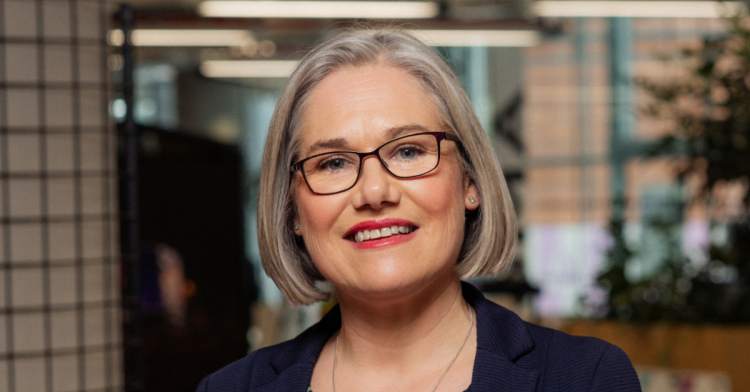
Cleo Curl, group insurance director at Landsec, spoke to Airmic News about captive strategies in a soft market, how to position a captive for long-term strategic impact, and overcoming internal resistance.
Has the soft market impacted your captive strategy?
In some ways, yes - it has created opportunities to revisit the balance between retention and transfer. But it hasn't changed the way we think about risk financing.
The market is one factor, but it's not the only factor. We're looking at the overall economics of risk financing and where it makes sense to retain risk versus transfer it. One of the advantages of having a captive is that it allows you to assess those decisions from a long-term perspective rather than reacting to short-term market cycles.
Ultimately, the captive gives us flexibility and allows us to make decisions based on value rather than market conditions alone.
What factors are important for positioning a captive for long-term strategic impact?
A captive needs a reason to exist.
Captives can sometimes be viewed as technical insurance or financial structures, but their value comes from what they enable an organisation to do. The most successful captives are those that support wider business objectives by providing greater control, flexibility and choice in the way risk is financed.
One of the challenges with captives is that it's easy to focus on the structure itself rather than the value it creates. The real benefit is the flexibility, insight and control it gives an organisation when making risk financing decisions.
Like any strategic asset, a captive needs to continue demonstrating its relevance. If it's not creating value for the organisation, it becomes difficult to justify over the long term.
What is your biggest internal challenge?
It’s the constant education piece. It can be challenging to explain the value of the captive in a way that resonates with the wider business.
Boards focus on balance sheets and they like financial predictability, but the captive’s value does not always present itself with pound signs, and captives don’t always behave as expected because we can’t always predict the losses.
Constantly and consistently reiterating the messaging and explaining the long-term proposition has been key and over time it’s got easier as awareness and understanding have grown.
It has also challenged me in a positive way: it forces me to consider the captive through different lenses and to regularly reflect on whether we could be doing things differently.
How has Landsec's use of its captive evolved since you've worked there?
We've adjusted its participation within the programme over time to reflect changing market conditions and our own view of where it makes sense to retain risk. That flexibility is one of the captive's greatest strengths and has enabled us to make more informed decisions about the balance between risk transfer and risk retention.
The captive has also given us greater insight into the economics of our risk financing programme. It provides a useful benchmark when assessing opportunities in the commercial market, while helping us better understand the value of the captive's role within our overall risk financing structure.
That has enabled us to make more informed decisions about where risk is best retained, where it should be transferred, and how the programme should evolve over time. More broadly, the captive has become an increasingly valuable tool in supporting discussions around risk appetite, programme structure and risk financing.
How do you think the UK's captive regime could impact the global captive landscape?
I think it's a positive development and could help make captives more accessible to a wider range of organisations.
The UK has a highly respected insurance market, but historically companies wanting to establish a captive have often needed to look offshore. Having a domestic option could encourage more organisations to explore captives as part of their risk financing strategy.
That said, established domiciles such as Guernsey, Bermuda and Luxembourg have strong track records and well-developed ecosystems. The success of a UK regime will depend on whether it offers a genuinely compelling proposition in terms of regulation, governance and ease of doing business.
Ultimately, organisations will make decisions based on value. If something is already working well, there needs to be a clear benefit to doing things differently.
What one piece of advice would you give a company looking to establish a captive for the first time?
Don't start with the captive. Too often the conversation starts with whether a company should establish a captive. For me, the more important question is what you're actually trying to achieve.
Whether that's gaining greater control over retained risk, improving the efficiency of risk financing, accessing additional capacity or supporting wider business resilience, the objective should drive the decision, not the structure.
The organisations that get the most value from captive ownership tend to be those that focus on the business outcomes they're seeking rather than the captive itself.