
From agility to survival: lessons in risk from Ireland’s SMEs
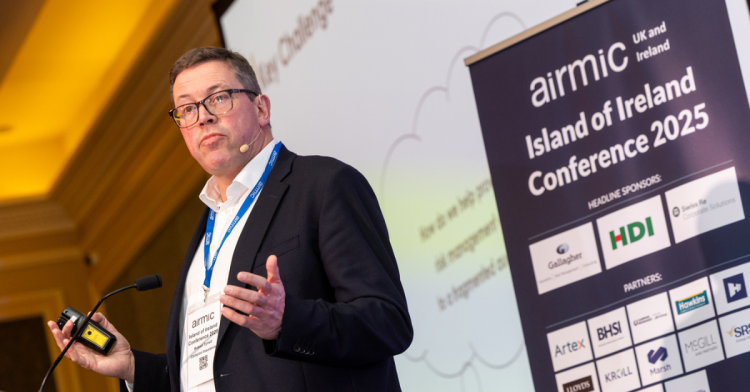
Despite their distinct risk management needs and capabilities, SMEs and large enterprises can learn from each other, according to Robert Tyrrell, managing director at Irish broker Campion.
With 99% of all businesses in Ireland considered a small or medium-sized enterprise, SMEs sit at the heart of Ireland’s economic engine. Despite the strong presence of foreign direct investment in Ireland, the health of its domestic economy depends on ensuring the SME market is not overshadowed or underserved, Robert Tyrrell, managing director at the broker Campion, told delegates in Ireland.
Campion is part of the PIB group – an international insurance intermediary group with a strong focus on the SME market. This market has distinct risk management needs. Few businesses have an in-house risk professional, and insurance decisions are often made by the finance director or CEO – people already juggling countless operational demands.
Their exposure to financial shocks and existential threats can be sharper than for large corporates, given their slimmer margins, minimal diversification and smaller capital base.
As Tyrrell explains, “As an SME you can’t always chase the perfect solution – you chase the practical one, because survival depends on it.”
Ireland’s broker landscape was historically fragmented, reflecting the SME market itself, although the past five years have seen rapid consolidation. Campion is a case in point: it now incorporates more than 20 previously independent retail brokers. The challenge, says Tyrrell, is ensuring customers remain as satisfied with the new, larger structures as they were with their local broker where they originally placed their business.
A pragmatic resilience
Speaking to Airmic News after the conference, Tyrrell says that, despite their size and smaller resources, SMEs should not be underestimated in their ability to understand and respond to risk. Irish SMEs have navigated a remarkable sequence of shocks: the property crash in 2007, Brexit, COVID-19, the Ukraine conflict, tariff changes and ongoing supply-chain disruption.
These experiences have demonstrated an acute, practical risk awareness. “In many ways, SMEs have a competitive advantage over major corporates because they’re agile. The person dealing with the risk is often the CEO or founder. They can really assume the risk as part of their decision making.”
Larger firms are often weighed down by process, siloes and competing priorities and can learn from the SME mindset: “The key is to identify risks as a whole business, make decisions close to the front line and embrace adaptability,” says Tyrrell.
But the learning is two-way. Larger corporates typically apply greater rigour, formality and objectivity to risk decisions. SMEs can benefit by borrowing these disciplines without adopting the bureaucracy, he believes:
“SMEs can suffer from a lack of discipline if the business is too personality driven, or if the leaders do not take the time to step back and work on the business. You need to be objective when assessing risk.”
SMEs continue to resist cyber market
Cyber risk is a major vulnerability for the SME market, but insurance penetration remains frustratingly low, reflects Tyrrell. Only about 5% of Irish SMEs currently hold cyber insurance, and only another 5% are open to engaging with it. Complacency, competing pressures and cost all play a role, even though prices have fallen and acceptance criteria are more achievable.
Campion previously experienced a ransomware incident, which vividly illustrated how the value of cyber insurance extends beyond the financial claim: “It showed me that insurance isn’t just financial protection – it’s access to expertise you simply can’t get quickly on your own. For an SME with limited budget and expertise, that is invaluable.”
The broker’s role
Brokers remain pivotal in helping SMEs navigate this landscape. Tyrrell would like to see their focus shift from price negotiation to business-risk diagnosis, challenging clients to think beyond cost and toward resilience. “A broker’s job isn’t to find the lowest price; it’s to diagnose the customer’s risks and help them make an informed decision,” he says.
For SMEs, that may mean accepting higher upfront premiums to avoid existential losses later. For brokers, it requires educating clients, simplifying complexity and tailoring advice to a deeply diverse audience.