
Back to basics in a world that refuses to stand still
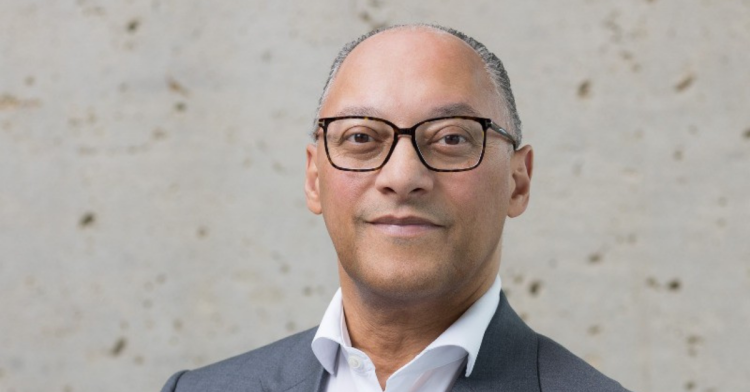
By Andreas Berger, group CEO, Swiss Re and a keynote speaker at Airmic’s conference
At first glance, the theme of this year's Airmic conference, “Back to Basics” sounds like a return to simplicity. In reality, the fundamentals of risk management have never been more complex.
Today’s risk environment is defined by interconnected uncertainty. Geopolitical fragmentation, natural catastrophes, cyber threats and supply chain disruption are by no means isolated challenges.
They interact, amplify one another and move faster than many organisations are structured to respond. For risk managers, brokers and business leaders, the core question in re/insurance is no longer simply: How do we transfer risk?
Instead, we need to be asking ourselves this: How do we build resilience in a world where uncertainty and volatility are accelerating?
Meanwhile, the fundamentals remain intact. At Swiss Re, we believe the enduring foundations of risk management are foresight, adaptability and informed decision making. Strong underwriting discipline and effective risk transfer remain essential.
But as risks grow more intensely interconnected, resilience today may also depend increasingly on better data, access to earlier insights and stronger partnerships, all of which can build the confidence to act before threats turn into actual losses.
In this context, deep risk engineering expertise is emerging as a crucial tool in the box to help organisations identify and quantify their existing risk profiles and anticipate potential future challenges.
It is this mind shift that is particularly relevant for the Airmic community today.
UK businesses are an important part of a volatile world. They are navigating an environment where the boundaries between operational, financial, technological and geopolitical risk simply don’t exist. A cyber event can become a reputational crisis, not within days but within hours or even minutes. Disruptions caused by a natural catastrophe can trigger supply chain, workforce and regulatory consequences simultaneously.
Building resilience in partnership
In this environment, insurance has a larger role to play than simply responding after an event occurs.
Our industry may increasingly provide further value in helping organisations understand risk more deeply, quantify uncertainty more effectively and strengthen resilience before losses materialise.
That is why data, analytics and technology are becoming such important enablers across the insurance value chain. AI is a key part of this, but AI itself is not the starting point – first, you need a strong data foundation that facilitates consistent, scalable and efficient AI innovation across the business.
At the same time, resilience is ultimately a human capability as much as it is a technical one. The organisations that will navigate uncertainty best are those able to combine analytical insight with decisive leadership, a readiness to collaborate and long-term thinking.
Nobody can do this alone. One of the defining characteristics of today’s risk landscape is that many challenges demand partnerships between all of the owners of risk. Adapting to extreme weather events or advanced technologies requires deeper collaboration between corporates, brokers, re/insurers and the public sector. Swiss Re has consistently emphasised the importance of public-private partnerships in building long-term resilience for society at large.
This same philosophy shapes how Swiss Re Corporate Solutions approaches the commercial insurance market. It is our experience that an increasing number of our corporate clients are looking not only for capacity, but for strategic dialogue around how to build resilience.
They want a strong partner who can help them anticipate threats earlier, navigate volatility with greater confidence and make better decisions in uncertain conditions. Alternative risk transfer solutions, such as captives and parametrics, are examples of innovations that address these client needs.
Strong foundations in an uncertain world
In many ways, that brings our industry back to its true foundations.
The fundamentals of insurance have always been about enabling progress in uncertain times – helping ambitious projects move ahead and making sure individuals can realise their aspirations.
Insurance is necessary for businesses to invest, innovate and thrive – regardless of the circumstances. When clients buy a policy, they are investing in peace of mind. As such, the claims experience is the moment of truth in the relationship between insurers and insureds.
Those fundamentals remain unchanged.
What has changed is the speed, complexity and interconnectedness of the world around us.
So “Back to Basics” does not mean returning to the past. It means doubling down on our purpose.
For our industry, the purpose is clear: to combine risk knowledge, data, technology and partnership in ways that help businesses and society become more resilient. In a world defined by uncertainty, that may be the most important basic of all.